Garlic (Allium sativum) has long been revered not only as a flavourful addition to countless dishes but also for its remarkable health benefits rooted in a complex chemistry of organo-sulphur compounds. The primary bioactive — allicin (diallyl thiosulfinate) — is thermally labile: when subjected to steam distillation it rapidly converts into the more stable volatile sulphides that constitute garlic essential oil, chiefly diallyl disulfide (DADS, approximately 60% of the finished oil), diallyl trisulfide (DATS, approximately 20%), and smaller amounts of vinyl dithiins. Both DADS and DATS retain documented cardiovascular and antimicrobial activity, making garlic essential oil a commercially important ingredient even though free allicin itself does not survive distillation intact. As global demand for natural antimicrobials and functional food ingredients accelerates, producers who invest in precisely controlled low-temperature steam distillation infrastructure gain a decisive advantage in yield, traceability, and compliance.
✓Key Takeaways
- →Garlic essential oil is the volatile sulphide fraction from steam distillation (0.1–0.3% yield from dried garlic); it contains DADS (~60%) and DATS (~20%) — not free allicin, which degrades during distillation.
- →Allicin is thermally labile above 60°C and converts to DADS and DATS during steam distillation; both compounds retain HMG-CoA reductase inhibition activity, supporting cardiovascular health claims.
- →Low-temperature distillation at 80–95°C is essential to maximise DADS and DATS yield; SS 316L construction is mandatory because garlic sulphur compounds corrode copper and brass.
- →The dual Florentine flask is required for garlic oil (d = 1.05, heavier than water) — standard oil-lighter-than-water separators lose significant yield to the hydrosol discharge stream.
- →Garlic essential oil differs fundamentally from garlic oleoresin: the oil is distilled (volatile fraction only); the oleoresin is solvent-extracted (captures alliin, allicin, flavonoids, and fixed oils).
- →Modern distillation plants reduce energy consumption by 30–40% through steam recycling and heat integration, with PLC automation and GC-MS data logging providing batch traceability for pharmaceutical and food buyers.
1Why Garlic Oil is in High Demand
Garlic essential oil — extracted through low-temperature steam distillation at 80–95°C to limit thermal degradation — delivers a concentrated source of bioactive sulphide compounds that serve multiple industries simultaneously. Typical yield from quality dried garlic is 0.1–0.3% v/w, meaning each 100 kg batch of dried feedstock produces between 100 ml and 300 ml of finished oil. This scarcity, combined with wide-ranging utility across pharma, food, and cosmetics, keeps garlic oil consistently priced at a premium relative to many other essential oils.
- Health and Medicinal Uses: Both DADS and DATS inhibit HMG-CoA reductase — the same enzyme targeted by statin drugs — providing a mechanistic basis for the cholesterol-lowering effects observed in clinical trials. Studies using 600–900 mg per day of standardised garlic equivalent have demonstrated statistically significant reductions in LDL cholesterol and improvements in arterial elasticity. The antimicrobial potency of DATS against Gram-positive and Gram-negative pathogens, including MRSA strains, also positions garlic oil as a research-active topic in the post-antibiotic era.
- Cosmetic and Skincare Industry: Garlic oil's proven antibacterial action against Propionibacterium acnes and its ability to stimulate scalp circulation make it a sought-after active in anti-acne serums, scalp treatment oils, and anti-dandruff formulations. Because the oil is highly potent — effective at concentrations of 0.01–0.1% in finished cosmetic products — a small quantity of high-purity distilled oil goes a long way, supporting attractive profit margins for formulators. Cosmetic-grade garlic oil requires rigorous GC-MS profiling and absence-of-pesticide testing before use.
- Culinary Applications: Garlic essential oil is approved as a Generally Recognised as Safe (GRAS) flavouring under FDA 21 CFR Part 182 and as a natural flavouring under EU Regulation 1334/2008, giving food manufacturers a clean-label, concentrated garlic flavour source. Used at 5–50 ppm in sauces, dressings, marinades, and snack seasonings, it delivers consistent batch-to-batch flavour intensity that fresh garlic cannot match — critical for large-scale food manufacturers with tight sensory specifications. The non-aqueous nature of the oil also confers extended shelf life compared to fresh garlic extracts.
- Nutraceuticals and Livestock Feed: In the nutraceutical channel, garlic oil is micro-encapsulated or blended into softgel capsules standardised for DADS and DATS content, often combined with omega-3 oils. The livestock feed sector consumes a significant portion of global production: garlic oil supplemented at 100–200 mg/kg in poultry and swine feed has demonstrated growth-promotion and pathogen-suppression effects comparable to sub-therapeutic antibiotic use — a commercially important attribute as veterinary antibiotic restrictions tighten globally. Pharmaceutical-grade garlic oil for these channels requires documented batch traceability and GMP manufacturing records.
2The Garlic Oil Distillation Process: How It Works
Garlic essential oil is extracted using steam distillation — a method that, when conducted at 80–95°C with controlled low-pressure steam, preserves the maximum yield of volatile sulphide compounds while preventing excessive thermal decomposition of DADS and DATS into less active lower-molecular-weight fragments. The entire distillation cycle for a standard batch typically requires 3–5 hours from charge to collection. Equipment material selection is as critical as temperature control: unlike copper stills used for many essential oils, garlic processing demands stainless steel (SS 316L) throughout because garlic's sulphur compounds react with copper to form greenish copper sulphide deposits that contaminate the oil and corrode the equipment.
- Harvesting and Preparing the Garlic: Fresh garlic bulbs are cleaned, peeled, and either sliced or crushed to a particle size of 3–5 mm, which activates alliinase enzyme activity — the enzymatic step that converts alliin to allicin before distillation begins. The resulting allicin, though it will not survive as allicin in the final oil, is the precursor pool that determines the total sulphide yield of the distillation. Authentication of raw material variety (e.g., Yamuna Safed, G1, Bhima Purple) by HPTLC or near-infrared spectroscopy ensures batch-to-batch consistency of allicin precursor content before processing begins.
- Chopping and Crushing: Garlic cloves are chopped or crushed to a uniform small size to increase the surface area exposed to steam — a 5–10 mm particle exposes significantly more intracellular material than a whole clove, directly improving the extraction rate and reducing total distillation time by 20–30%. The crushing step should be performed immediately before charging the distillation vessel to prevent premature allicin volatilisation and oxidation losses. Industrial-scale plants use stainless steel multi-roller crushers or disc mills with adjustable gap settings to control final particle size and ensure uniform steam penetration through the packed bed.
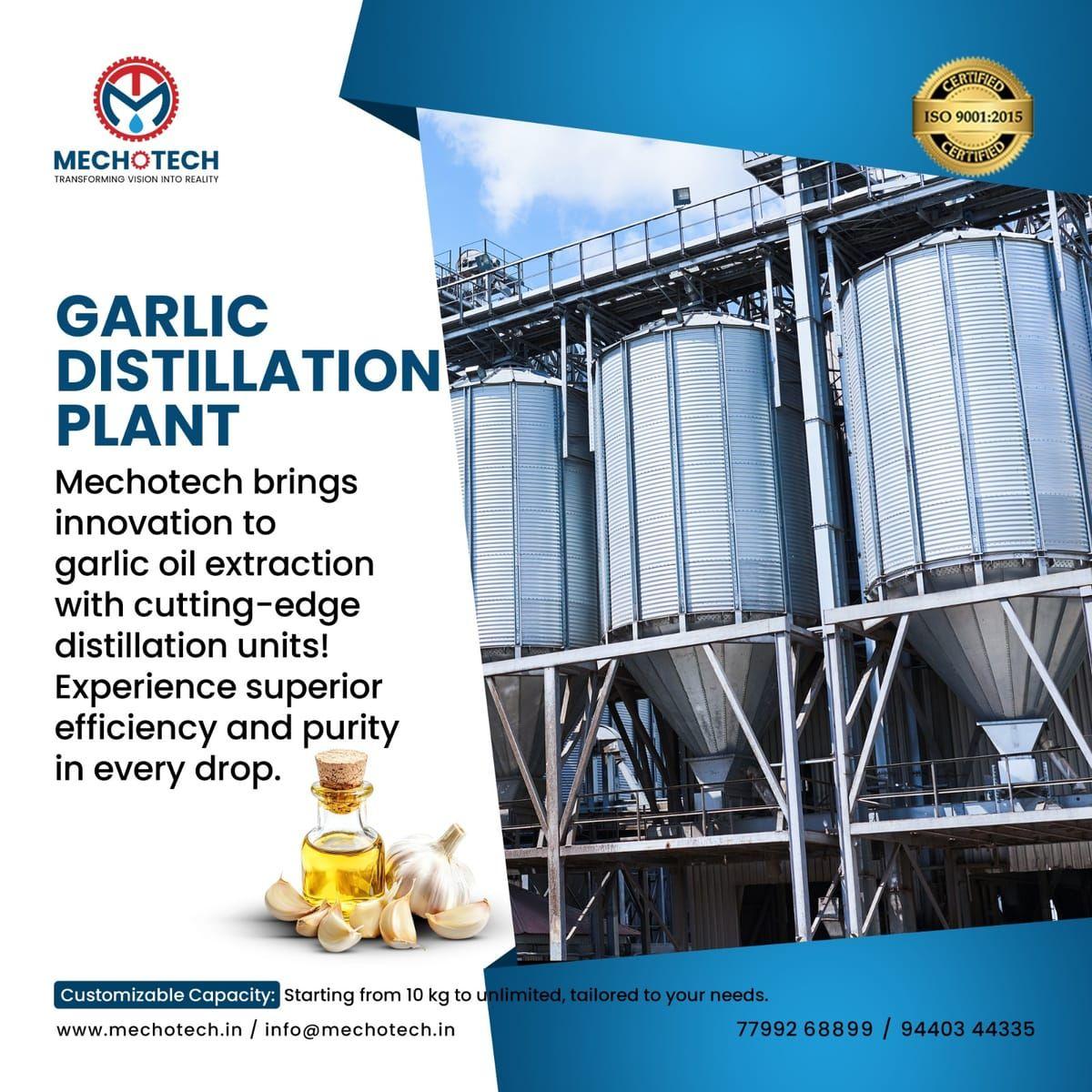
- Steam Distillation Process: Crushed garlic is loaded into the SS 316L distillation chamber, and low-pressure steam at 80–95°C is introduced through a perforated distribution plate at the base of the charge. Steam carries the volatile sulphide vapours — primarily DADS and DATS — upward through a goose-neck into a stainless steel shell-and-tube condenser where the vapour is cooled to liquid at 20–25°C. The condensed liquid (a mixture of distilled oil and hydrosol water) flows into the Florentine flask for phase separation. Because garlic oil has a specific gravity of approximately 1.05 — slightly heavier than water — our dual Florentine flask configuration collects oil from the bottom port rather than the top port used for lighter essential oils, a design detail that is critical for clean separation and accurate yield measurement.
- Activated Carbon Polishing and Quality Testing: Raw-distilled garlic oil is passed through an activated carbon polishing column to remove dark-coloured impurities and residual plant particulates, yielding a pale yellow to amber oil with the characteristic sharp sulphidic aroma. Each batch undergoes GC-MS analysis to verify the DADS and DATS concentration profile against specification; typical commercial-grade garlic oil contains DADS 55–65%, DATS 18–25%, and allyl propyl disulfide 5–10%. Specific gravity (target 1.03–1.07 at 25°C), refractive index (1.560–1.580), and optical rotation are also measured per IFRA and AFNOR standards before release.
3Garlic Oil vs Garlic Oleoresin: Knowing the Difference
A frequent point of confusion in the marketplace is the distinction between garlic essential oil and garlic oleoresin — two distinct products with different chemical compositions, applications, and price points. Understanding which product your end application requires is essential before commissioning extraction equipment, as the processing lines are different.
- Garlic Essential Oil (Distilled): Produced exclusively by steam or hydro-distillation, garlic essential oil contains only the volatile fraction of garlic chemistry — primarily DADS, DATS, vinyl dithiins, and allyl propyl disulfide. It does not contain alliin, the stable non-volatile precursor amino acid, or any water-soluble polyphenols and flavonoids. At a yield of 0.1–0.3% from dried garlic, it is a concentrated volatile fraction with an intense aroma, used in food flavouring (ppm concentrations), aromatherapy, and pharmaceutical topical applications.
- Garlic Oleoresin (Solvent Extracted): Garlic oleoresin is produced by solvent extraction (typically aqueous ethanol at 60–70%) and captures the full spectrum of garlic chemistry: alliin, allicin (where processing is conducted at low temperature), water-soluble flavonoids such as quercetin and kaempferol, fixed oils, and some volatile sulphides. The oleoresin yield is 15–20% from dried garlic, making it a more abundant and more complete phytochemical product. Pharmaceutical-grade garlic oleoresin is standardised for alliin content (expressed as allicin potential) and is the preferred form for cardiovascular and antimicrobial supplement formulations.
4Why Mechotech is the Best Partner for Garlic Oil Distillation
At Mechotech, we have designed and commissioned garlic oil distillation systems ranging from 100 kg/batch pilot plants to 2,000 kg/batch industrial configurations, accumulating specific engineering knowledge around the material compatibility, thermal sensitivity, and separation challenges unique to Allium sativum processing. Every plant we supply is engineered in SS 316L throughout — no copper or brass fittings — with low-pressure steam generators that allow precise temperature control in the 80–95°C band critical for optimal DADS and DATS yield without excessive thermal cracking.
- Dual Florentine Flask Design: Our standard garlic oil plants include a dual Florentine flask system that accommodates the bottom-heavy density (d = 1.05) of garlic oil — an engineering adaptation absent from general-purpose essential oil stills. This ensures clean phase separation, accurate volume measurement of each batch yield, and minimal oil loss to the hydrosol stream. The hydrosol water phase is separately collected as garlic hydrosol, which has commercial value as a flavouring ingredient and antimicrobial rinse.
- Customisable Distillation Solutions: We engineer plants for small artisanal batches (100 kg/charge) through to large industrial operations (2,000 kg/charge and above), with customisable distillation vessel geometry optimised for the bulk density and compressibility of crushed garlic. Steam flow rate, distillation duration, and charge depth are all process-validated at commissioning to guarantee the target yield of 0.1–0.3% is consistently achieved across operator shifts and seasonal raw material variation. Full PLC automation with data logging ensures batch traceability for pharmaceutical and food industry audit requirements.
- Sustainability and Biomass Management: Spent garlic marc — the solid residue after distillation — retains significant amounts of fructooligosaccharides (FOS), a prebiotic fibre with commercial value in the nutraceutical market. We advise clients on marc characterisation and downstream processing options, which can include FOS extraction, composting, or biogas generation. Energy integration between the steam generation system and the condensate return loop reduces net steam consumption per batch by 25–35% compared to open-loop configurations.
- Comprehensive Technical Support: Mechotech's engineers provide on-site commissioning, operator training on distillation parameters, and ongoing remote process support. We maintain a library of reference GC-MS profiles for garlic oil batches processed on our systems, enabling rapid diagnosis when a batch deviates from specification — whether the root cause is raw material moisture, crushing particle size, distillation duration, or condenser temperature. Annual calibration services for temperature, pressure, and flow instruments are available under our plant maintenance contracts.
Frequently Asked Questions
What is garlic essential oil and how does it differ from garlic oleoresin?+
Why is allicin important in garlic processing?+
What are the steps in garlic oil steam distillation?+
What are the main uses of garlic essential oil?+
How are modern distillation plants transforming the garlic oil industry?+
Conclusion
The benefits of garlic essential oil are undeniable — from DADS and DATS-mediated cardiovascular activity to broad-spectrum antimicrobial action and clean-label food flavouring applications. As global demand continues to rise, producers need distillation solutions that are precisely engineered for the unique chemistry of Allium sativum: SS 316L construction, low-temperature steam at 80–95°C, and dual Florentine flask separation for bottom-heavy garlic oil. By choosing Mechotech, you are partnering with a company that has resolved these exact engineering challenges across multiple installed plants since 1997 — delivering high-quality, traceable garlic oil that meets both food-grade and pharmaceutical-grade buyer requirements. Contact us to discuss your batch size, target GC-MS specification, and site infrastructure, and we will design the most cost-effective system for your production plan.
Ready to Build Your Extraction Plant?
Mechotech engineers are ready to design the perfect plant for your application.
Get a Free Consultation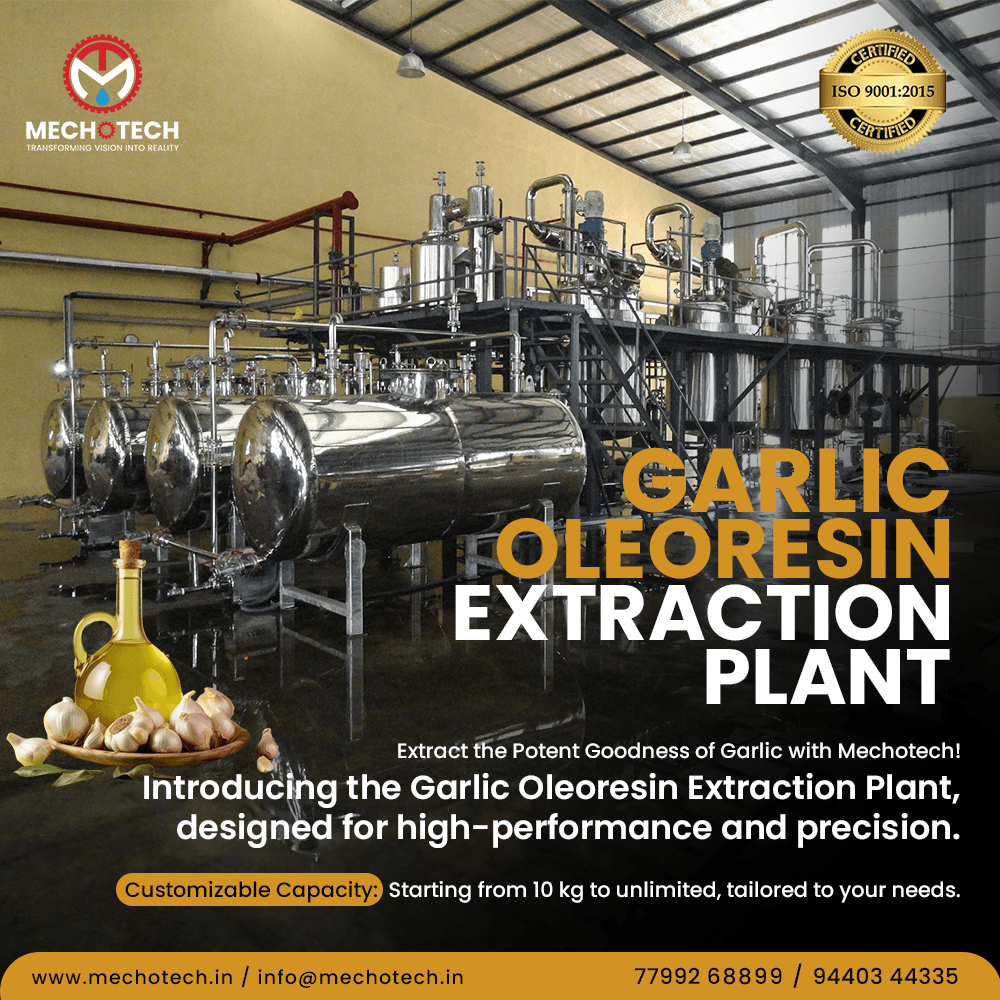
.jpeg&w=1920&q=75)