While fresh garlic bulbs (Allium sativum) have been used in cooking and traditional medicine for millennia, the oleoresin extracted from garlic is a fundamentally different and far more complete product than either fresh garlic or garlic essential oil. Unlike steam-distilled garlic oil — which captures only the volatile sulphide fraction (primarily DADS and DATS) — garlic oleoresin is produced by solvent extraction and captures the full spectrum of garlic's bioactive chemistry: alliin (the stable precursor amino acid), allicin (diallyl thiosulfinate) and its enzymatically generated derivatives, water-soluble flavonoids including quercetin and kaempferol, S-allylcysteine (SAC), and fixed lipid constituents. This more complete chemical profile is what makes garlic oleoresin the preferred form for pharmaceutical-grade cardiovascular supplements, standardised antimicrobial formulations, and functional food ingredients — and what makes the extraction process significantly more technically demanding than simple distillation.
✓Key Takeaways
- →Garlic oleoresin captures alliin, allicin, S-allylcysteine, flavonoids, and fixed oils — a complete phytochemical profile unavailable from steam-distilled garlic essential oil, which contains only volatile sulphides (DADS and DATS).
- →Allicin is unstable above 60°C; cold-process extraction at below 40°C using 60–70% aqueous ethanol and deep-vacuum wiped-film evaporation (below 0.02 bar) is mandatory to preserve allicin potential in the finished oleoresin.
- →Commercial pharmaceutical-grade garlic oleoresin is standardised to 1–5% alliin (allicin potential); 1 mg alliin yields approximately 1.12 mg allicin — declared as allicin equivalent on supplement labels.
- →Clinical evidence at 600–900 mg/day allicin equivalent shows 10–15% LDL reduction and modest anti-thrombotic effects in published meta-analyses of randomised controlled trials.
- →Spray drying with maltodextrin carrier (20–40% of solids) protects allicin during drying and provides a stable powder with 24-month shelf life; enteric capsule coating prevents gastric acid destruction before intestinal absorption.
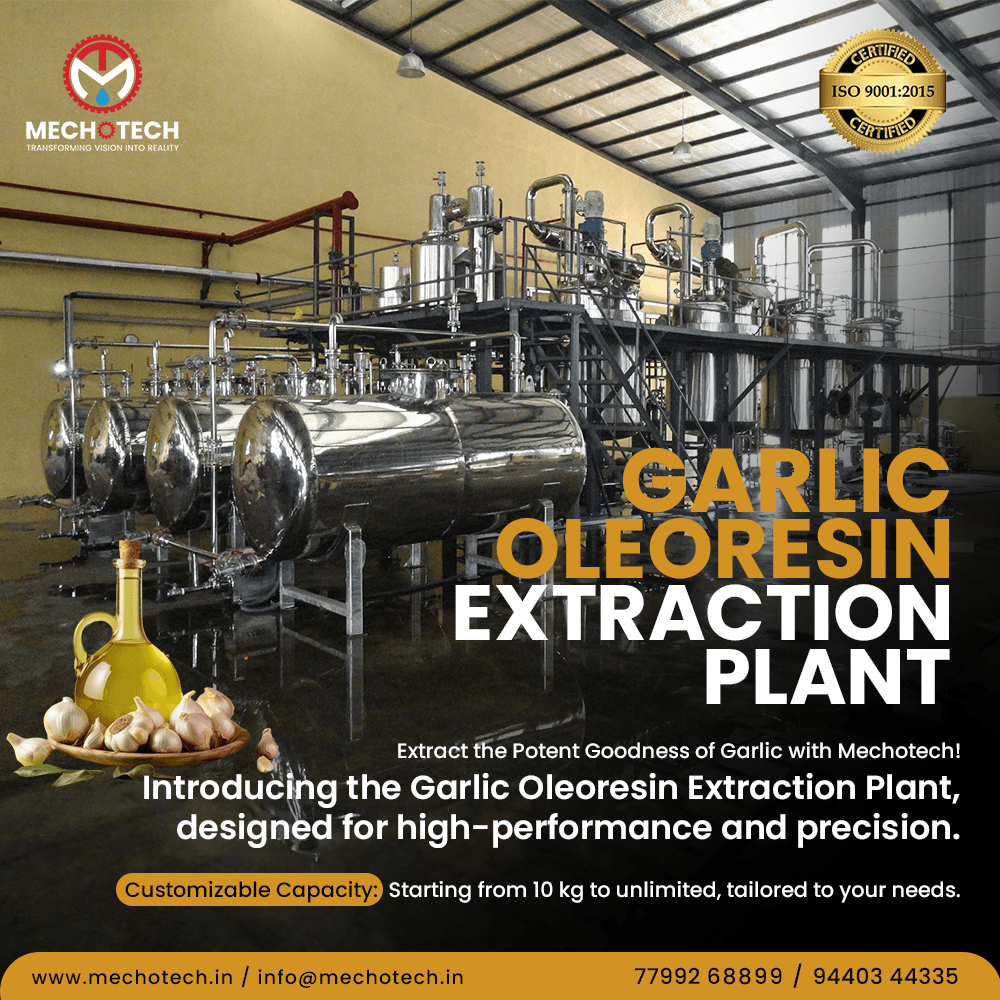
- →Mechotech's cold-process garlic oleoresin plants (100 kg/day to 2+ TPD) feature jacketed SS 316L extraction vessels, deep-vacuum wiped-film evaporation, spray drying with cyclone separator, and full GMP documentation for pharmaceutical-grade production.
1Garlic Oleoresin vs Garlic Oil: Understanding the Critical Distinction
The distinction between garlic oleoresin and garlic essential oil is commercially critical — selecting the wrong product for a given application leads to formulation failures and regulatory non-compliance. Both are valuable garlic derivatives, but they differ fundamentally in composition, production process, applications, and pricing.
- Garlic Essential Oil (Distilled — Volatile Fraction Only): Steam-distilled garlic essential oil contains exclusively the volatile sulphide compounds formed during distillation: diallyl disulfide (DADS, ~60%), diallyl trisulfide (DATS, ~20%), and minor vinyl dithiins. It does not contain alliin, free allicin, flavonoids, or water-soluble compounds — because none of these are volatile at distillation temperatures. At a yield of 0.1–0.3% from dried garlic, essential oil is used for flavour application (ppm concentrations in food), aromatherapy, and pharmaceutical topicals where the specific volatile sulphide profile is required.
- Garlic Oleoresin (Solvent Extracted — Complete Phytochemical Profile): Garlic oleoresin is produced by aqueous ethanol extraction at low temperature and captures alliin (the stable non-volatile sulphur amino acid that serves as the allicin precursor), allicin itself (where the extraction is conducted carefully at below 40°C), S-allylcysteine (SAC, a water-soluble sulphur compound with independent cardiovascular activity), quercetin, kaempferol, and fixed oils. Yield is 15–20% from dried garlic — 50–100× the yield of distilled essential oil. It is standardised by alliin content (expressed as allicin potential: 1 mg alliin yields approximately 1.12 mg allicin) and is the form used in cardiovascular pharmaceutical supplements and standardised nutraceuticals.
- Why Allicin Chemistry Makes Oleoresin Extraction Uniquely Challenging: Allicin is formed enzymatically — the enzyme alliinase converts alliin to allicin within seconds of cell disruption when garlic is crushed. However, allicin is unstable above 60°C, degrades rapidly in aqueous solutions at neutral or alkaline pH, and is irreversibly destroyed by heat within minutes at 80°C. This thermolability means that conventional solvent extraction at elevated temperatures (used for most oleoresins to accelerate extraction) is incompatible with allicin preservation. Cold-process extraction at below 40°C, immediate chilled filtration, and low-temperature vacuum evaporation are all non-negotiable requirements for a garlic oleoresin standardised for allicin potential.
2The Challenge: Extracting Pure Garlic Oleoresin at Scale
Scaling garlic oleoresin extraction from laboratory to industrial production introduces engineering challenges that are specific to the temperature sensitivity of allicin and the corrosive nature of garlic sulphur compounds. Each of the following challenges requires a purpose-designed engineering solution — generic extraction plant suppliers who have not previously designed garlic-specific systems will miss these requirements.
- Solvent Selection: Aqueous Ethanol at Optimal Concentration: Aqueous ethanol at 60–70% (v/v) is the optimal extraction solvent for garlic oleoresin because this concentration range captures both the water-soluble alliin and allicin (through the aqueous component) and the lipid-soluble S-allylcysteine, fixed oil fraction, and fat-soluble antioxidants (through the ethanol component). Higher ethanol concentrations (above 80%) reduce alliin extraction efficiency; lower concentrations (below 50%) increase co-extraction of pectins and water-soluble carbohydrates that foul evaporators. For clients targeting SAC as a specific marker, a hexane-ethanol blend extraction step can be added to improve lipid-soluble fraction recovery, with hexane removed to below 290 ppm (ICH Q3C Class 2 limit) by vacuum evaporation.
- Temperature Control Throughout the Process: Maintaining below 40°C throughout the entire process — extraction, filtration, and initial evaporation — is the single most important parameter for allicin preservation. The extraction vessels must be jacketed and connected to chilled water at 10–15°C; the filter press and all transfer pipework must be insulated and, where possible, jacketed. Even brief exposure to ambient temperature (25–30°C summer ambient in most Indian processing locations) during filtration or pump transfers will measurably reduce allicin content in the miscella. Temperature monitoring with data logging at each process stage is required to document cold-chain compliance for pharmaceutical buyers.
- Preserving Bioactive Compounds Through Concentration: Final concentration of the cold-filtered garlic miscella must be accomplished at below 40°C using a wiped-film evaporator under deep vacuum (below 0.02 bar absolute), which allows ethanol evaporation at approximately 20–25°C rather than the atmospheric boiling point of 78°C. This ultra-low temperature evaporation maintains allicin integrity through the concentration step, which would otherwise be the highest-risk thermal exposure point in the entire process. The concentrated garlic paste (30–50% dissolved solids) can then be spray-dried using an inlet air temperature of 150°C with maltodextrin carrier (20–40% of solids weight) — the brief millisecond residence time in the spray dryer does not measurably degrade allicin when the carrier system is correctly designed.
- Sustainability and Waste Management: Spent garlic marc after solvent extraction retains fructooligosaccharides (FOS, a prebiotic dietary fibre), garlic polysaccharides, and residual sulphur-containing compounds. Ethanol is recovered from the miscella at 95%+ recovery rate and recycled to the extraction vessels — solvent recovery is both an economic necessity (ethanol represents 40–60% of variable operating cost) and an environmental compliance requirement. The marc, desolventised by steam stripping and dried to below 12% moisture, can be sold as a natural soil amendment or composted as agricultural organic matter.
3Key Benefits of Mechotech's Garlic Oleoresin Extraction Plants
Mechotech's garlic oleoresin extraction plants are specifically engineered around the cold-chain requirements, stainless steel construction needs, and closed-loop solvent recovery architecture that garlic processing demands. Our plants are not adapted general-purpose extraction systems — they are purpose-designed garlic oleoresin lines with validated process parameters and full GMP documentation packages.
- Cold-Process Extraction Design: Every wetted surface — extraction vessel jackets, filter press, transfer lines, evaporator — is engineered for chilled water connectivity and insulated to maintain process temperature below 40°C throughout. Jacketed SS 316L extraction vessels with overhead agitators and chilled water jacket control maintain extraction temperature at 15–25°C, optimising both allicin stability and extraction kinetics. Temperature is logged automatically at each stage and included in the electronic batch record that accompanies every batch certificate of analysis.
- High Yield and Allicin Standardisation: Properly conducted cold-process extraction from quality Indian garlic (Yamuna Safed, G1 varieties, alliin content 0.8–1.2% of fresh weight) achieves garlic oleoresin standardised to 1–5% alliin (allicin potential). The allicin equivalent figure on supplement labels is calculated as: alliin content (%) × 1.12 = allicin equivalent (%). Commercial pharmaceutical-grade garlic oleoresin typically declares 1.3–2.5% allicin equivalent, which at the 600–900 mg/day dose used in clinical trials delivers 8–22 mg allicin equivalent per day — the dosing range associated with 10–15% LDL cholesterol reduction in published meta-analyses.
- Spray Drying with Maltodextrin Carrier for Allicin Protection: Liquid garlic oleoresin concentrate is converted to stable free-flowing powder by spray drying with a maltodextrin carrier system. The carrier matrix forms a physical barrier around allicin molecules, reducing their oxygen exposure and moisture-driven degradation. The resulting spray-dried powder with 20–40% carrier loading is stable for 24 months at 25°C and 60% RH when correctly packaged in hermetically sealed foil-laminate containers under nitrogen. For nutraceutical capsule applications, an enteric coating on the finished capsule prevents premature allicin destruction by gastric acid, improving bioavailability at the intestinal absorption site.
- Scalability and Flexibility: Mechotech's garlic oleoresin plants are supplied in modular configurations from 100 kg/day input (pilot and small commercial scale) to 2 tonnes/day and above (full commercial). The modular architecture allows a second extraction vessel to be added in parallel to double throughput without changes to the filtration, evaporation, or spray drying sections — which are typically designed with 20–30% capacity headroom at installation. All plants include closed-loop solvent recovery as standard, with ethanol recovery systems achieving 95%+ return rates.
- Comprehensive End-to-End Support: Mechotech provides GMP documentation packages including equipment qualification protocols (IQ/OQ/PQ), standard operating procedures for each process stage, cleaning validation protocols (critical for allergen management, as garlic is a declared food allergen under EU Regulation 1169/2011), and batch record templates compliant with FDA 21 CFR Part 111 dietary supplement cGMP requirements. Our team provides on-site commissioning, operator certification training, and remote process monitoring support throughout the plant's operational life.
4Applications of Garlic Oleoresin
Garlic oleoresin commands premium prices across multiple high-value sectors because of its complete phytochemical profile, standardised allicin content, and ease of incorporation into finished dosage forms compared to raw garlic or garlic powder.
- Cardiovascular Pharmaceutical Supplements: The strongest commercial application for pharmaceutical-grade garlic oleoresin is cardiovascular health supplements — a market supported by a substantial clinical evidence base. Multiple meta-analyses of randomised controlled trials report 10–15% reduction in LDL cholesterol, 7–8% reduction in total cholesterol, and modest blood pressure reductions at doses delivering 600–900 mg/day allicin equivalent. The anti-thrombotic activity of ajoene (an allicin degradation product formed in oil-macerations), the ACE-inhibitory properties of allicin-derived peptides, and the HMG-CoA reductase inhibition by DADS and DATS make garlic oleoresin a genuinely multi-mechanism cardiovascular active.
- Antimicrobial Formulations and MRSA Research: Allicin demonstrates broad-spectrum antimicrobial activity against Gram-positive and Gram-negative bacteria, fungi, and several protozoa. Clinical studies have documented activity against methicillin-resistant Staphylococcus aureus (MRSA) at minimum inhibitory concentrations achievable with topical application of standardised garlic oleoresin preparations. The combination of allicin with conventional antibiotics shows synergistic action in several documented studies, positioning garlic oleoresin as a research-active ingredient for anti-infective formulations as global antibiotic resistance rates rise.
- Food Industry: Natural Flavouring and Functional Ingredient: In food applications, garlic oleoresin serves as a concentrated natural garlic flavouring — replacing fresh garlic in large-scale manufacturing of sauces, condiments, ready meals, and snack seasonings with batch-to-batch consistency that fresh garlic cannot provide. A garlic oleoresin standardised at 2% allicin equivalent is typically used at 0.01–0.1% in finished food products (100–1,000 ppm), delivering clear label claims of 'natural garlic extract' or 'garlic oleoresin' under FSSAI, FDA, and EU natural flavouring regulations. The antimicrobial properties of allicin also provide a secondary preservation benefit in high-moisture food applications.
- Animal Feed Growth Promoter: Garlic oleoresin is used in poultry and swine feed at 100–300 mg/kg as a natural growth promoter and antimicrobial additive — an application that has grown rapidly as veterinary antibiotic restrictions tighten under antimicrobial resistance policies in the EU, USA, and increasingly India. Feeding trials have demonstrated improvements in feed conversion ratio (FCR), body weight gain, and reduced pathogen load in the gut of broiler chickens and swine supplemented with standardised garlic extract. Feed-grade garlic oleoresin specifications are less stringent than pharmaceutical-grade but still require allicin equivalent declaration and heavy metal compliance.
Frequently Asked Questions
What is garlic oleoresin?+
How is garlic oleoresin extracted?+
What is the typical allicin content of commercial garlic oleoresin?+
How does garlic oleoresin compare to garlic powder?+
What are the main applications of garlic oleoresin?+
Conclusion
As the demand for garlic oleoresin grows across cardiovascular supplement, antimicrobial research, food ingredient, and animal nutrition markets, the technical demands on the extraction process grow equally. Cold-process extraction at below 40°C, 60–70% aqueous ethanol solvent, deep-vacuum wiped-film evaporation, and spray drying with maltodextrin carrier are not optional refinements — they are the engineering requirements for a product that retains its full allicin potential and satisfies pharmaceutical buyer specifications. Mechotech's purpose-designed garlic oleoresin extraction plants are built around these requirements, not adapted from generic equipment. Contact us to discuss your target allicin equivalent specification, daily throughput requirement, and the GMP documentation package that your buyers require.
Ready to Build Your Extraction Plant?
Mechotech engineers are ready to design the perfect plant for your application.
Get a Free Consultation.jpeg&w=1920&q=75)