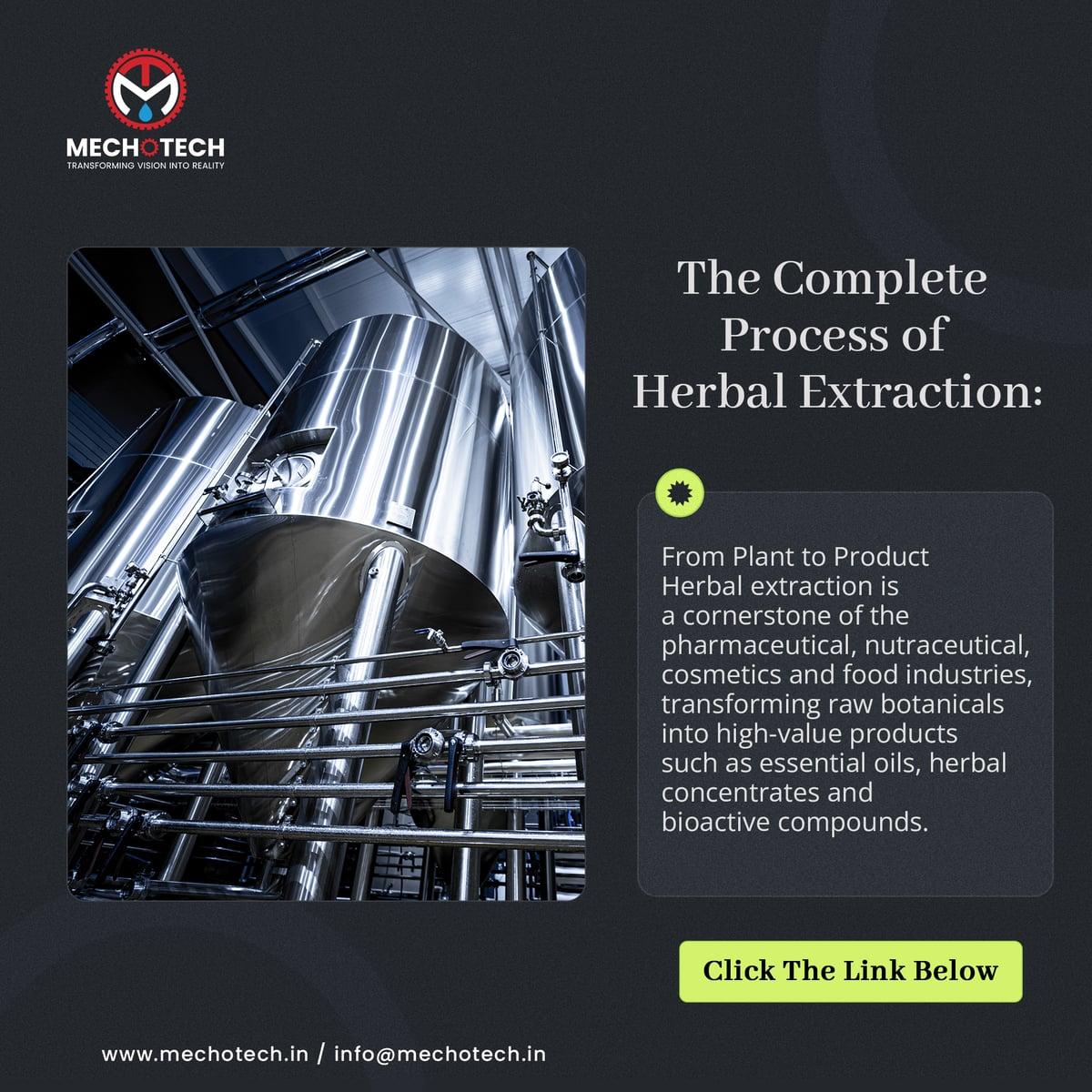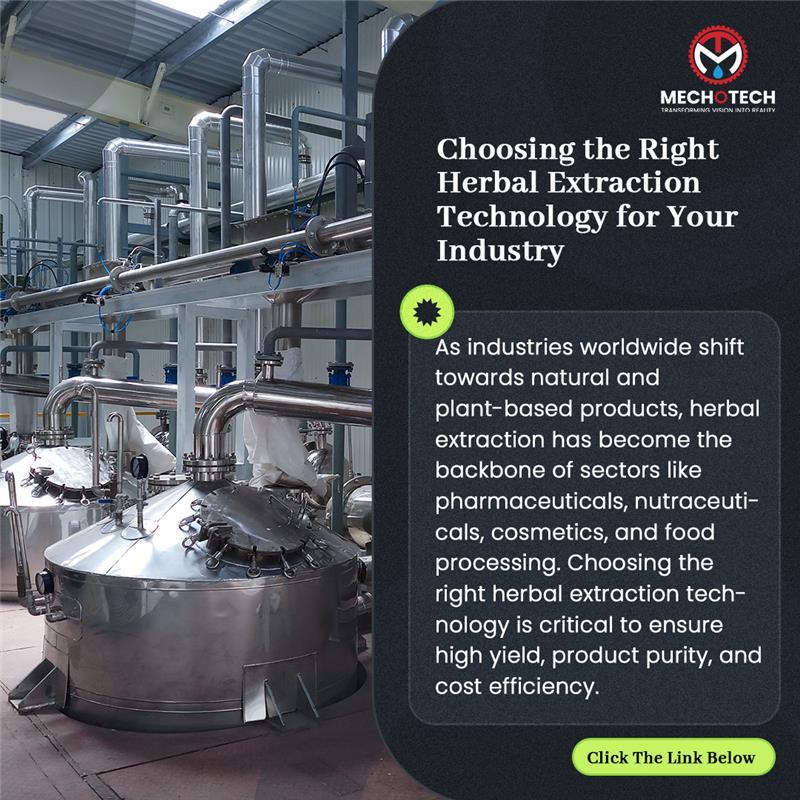
Herbal extraction is the industrial process of isolating, concentrating, and standardising specific bioactive compounds — alkaloids, polyphenols, flavonoids, terpenes, resins, and essential oils — from the complex organic matrix of plant material, making them available in precise, usable forms for pharmaceutical, nutraceutical, cosmetic, and food applications. The active compounds of commercial interest exist in plant tissue at concentrations typically ranging from 0.05% (aromatic compounds in rose petals) to 7% (curcuminoids in high-grade turmeric), and the purpose of extraction is to concentrate these compounds from that dilute plant matrix into a product that can be standardised, tested, and traded at a defined quality specification. The extraction method selected must match the physical and chemical properties of the target compound — volatile terpenes require steam distillation; non-volatile polyphenols and alkaloids require solvent extraction; heat-sensitive pharmaceutical actives may require supercritical CO₂. Understanding the fundamental operating principles of each method is essential for anyone evaluating extraction plant investment or optimising an existing extraction operation.
✓Key Takeaways
- →Herbal extraction isolates alkaloids, polyphenols, flavonoids, terpenes, resins, and essential oils from plant material — compounds present at 0.05–7% concentration in the raw plant matrix.
- →Solvent extraction (ethanol, hexane, acetone at 3–6 bar) is the method for non-volatile compounds at scale; plant material is ground to 20–80 mesh and the miscella concentrated by falling-film evaporation at 50–65°C.
- →Steam distillation at 0.3–1.0 bar with 2–8 hours contact time and condenser at 15–20°C is the industry standard for volatile essential oils — no solvent residue, universally food and pharma accepted.
- →Maceration (24–72 hours cold or warm solvent contact) suits heat-labile compounds and tincture production; supercritical CO₂ (31.1°C, 73.8 bar, operating at 35–45°C) delivers zero-residue premium extracts at 3–5× the capital cost of solvent extraction.
- →Applications span pharmaceuticals (standardised botanical APIs), cosmetics (plant actives), food colouring (turmeric E100, annatto E160b), nutraceuticals, and aromatherapy — each requiring different method selection, solvent choice, and quality system depth.
- →Mechotech has manufactured herbal extraction plants across all five industry segments from its Hyderabad facility since 1997, completing 2,654+ projects from pilot to commercial scale.
1What is Herbal Extraction?
Herbal extraction refers to the selective isolation and concentration of bioactive compounds from plant material — leaves, roots, bark, flowers, seeds, and stems — using physical or chemical processes that separate the compounds of interest from the inert plant matrix (cellulose, lignin, water, and other non-target material). The resulting extracts contain the active compounds in concentrated form: alkaloids such as piperine and berberine, polyphenols such as curcuminoids and catechins, flavonoids such as quercetin and rutin, terpenes such as menthol and thymol, resins such as boswellic acids, and essential oils such as citronellal and linalool. Each compound class has distinct physical properties — polarity, volatility, molecular weight, solubility — that determine which extraction approach is most appropriate. The goal is maximum recovery of the target compound at the required purity, with minimum co-extraction of unwanted compounds, at economically viable cost per kilogram of finished extract.
2Common Methods of Herbal Extraction
Four primary extraction methods serve the industrial herbal processing sector, each suited to a specific class of target compounds and a specific commercial context. Selecting the wrong method for your target compound results in low yield, poor purity, regulatory non-compliance, or economics that make the extraction operation unviable. The following method descriptions include the specific operating parameters that determine performance — temperature, pressure, solvent type, contact time — because these details are what differentiate a well-designed extraction plant from a poorly optimised one.
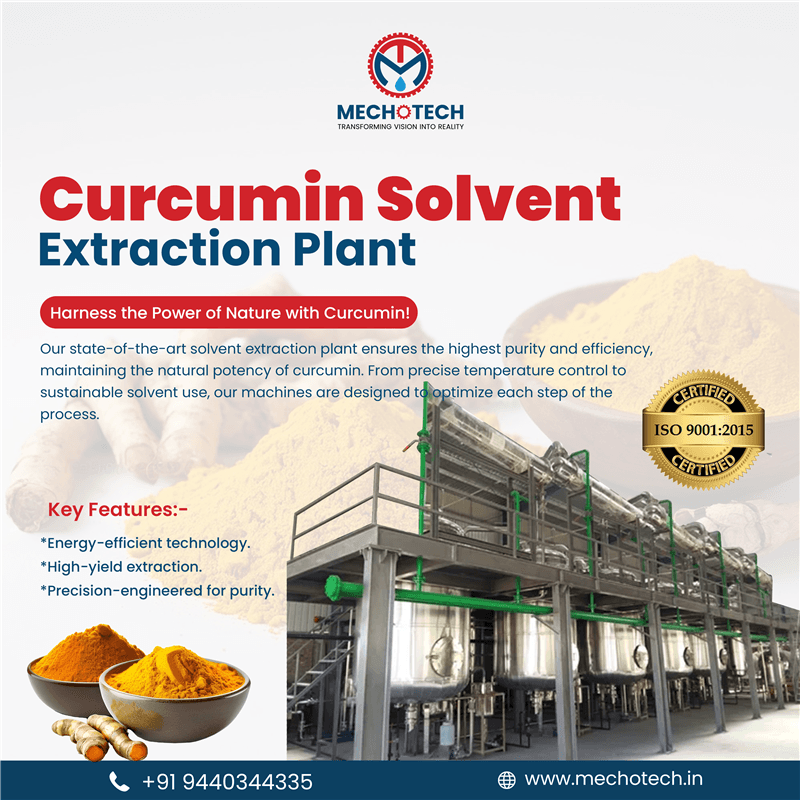
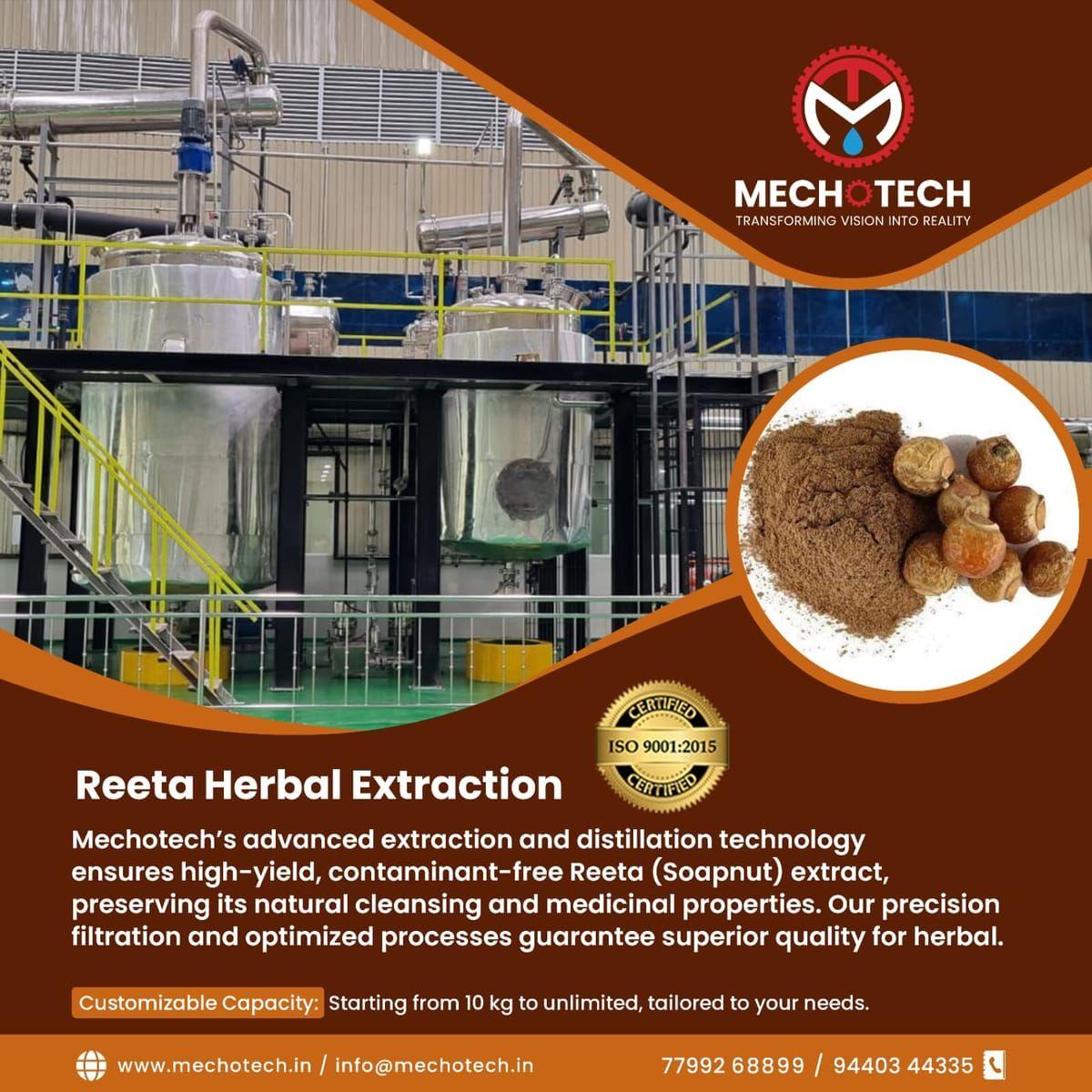
- Solvent Extraction: Solvent extraction is the most widely used industrial herbal extraction method, appropriate for non-volatile compounds including polyphenols, alkaloids, glycosides, resins, and fixed oils. The process begins with size reduction of the dried plant material to 20–80 mesh particle size to maximise solvent contact surface area, followed by loading into a closed extractor vessel where solvent is percolated through the plant bed at 3–6 bar pressure in a counter-current arrangement. The miscella — the solvent-plus-dissolved-compound solution — is collected and filtered to remove suspended plant particles, then fed to a falling-film evaporator operating at 50–65°C under vacuum (50–80 mbar) to concentrate the extract by removing 85–95% of the solvent volume. Common solvents are ethanol (food and pharmaceutical grade, polarity suitable for most polyphenols and alkaloids), hexane (food and industrial grade, suitable for lipophilic compounds and fixed oils), and acetone (high efficiency for curcumin extraction, flash point 0°C requires explosion-proof plant design).
- Steam Distillation: Steam distillation is the industry-standard method for extracting volatile essential oils from aromatic plants — the only compounds that can be economically and cleanly isolated by this method. Steam at 0.3–1.0 bar is passed through the loaded plant material in the distillation chamber over a contact time of 2–8 hours (species-dependent), vaporising the volatile aromatic compounds from the plant tissue. The mixed vapour stream of steam and aromatic compounds passes through a tube-in-shell condenser operated with cooling water at 15–20°C, condensing the vapour back to liquid — a mixture of essential oil and water (hydrosol). Oil and water separate in a Florentine flask due to density difference; the essential oil is decanted off the top while the hydrosol is either discharged or recirculated as steam (cohobation) for additional yield recovery. Yields range from 0.05% for high-value florals like rose to 10% for clove bud, depending on species and plant part.
- Maceration: Maceration is the simplest extraction technique — plant material is placed in direct contact with solvent for an extended period of 24–72 hours (cold maceration at ambient temperature) or 4–12 hours (warm maceration at 40–60°C) to allow passive diffusion of bioactive compounds from the plant cells into the surrounding solvent without agitation or pressure. Cold maceration is used for heat-labile compounds that would degrade under more aggressive extraction conditions, and for the production of traditional tinctures and botanical glycerites. It is also used as the first step in CO₂ co-extraction processes where a solvent pre-soak improves CO₂ extraction efficiency. The main limitations are lower extraction efficiency compared to pressurised percolation methods, longer process time per batch, and larger solvent volumes required — making maceration economically inefficient at large commercial scale for most applications.
- Supercritical CO₂ Extraction: Supercritical CO₂ extraction operates above carbon dioxide's critical point — 31.1°C and 73.8 bar — where CO₂ exists in a supercritical state with liquid-like solvating power and gas-like diffusivity. This combination of properties allows CO₂ to penetrate plant material efficiently and selectively dissolve target compounds, with solvation power tunable by adjusting operating pressure between 100–400 bar (higher pressure increases polarity and extracts a broader range of compounds). When extraction is complete and pressure is released, CO₂ reverts to its gas state and evaporates completely, leaving a pure extract with zero solvent residue — no headspace GC-MS residual solvent testing required for the extract. The operating temperature range of 35–45°C makes it ideal for heat-sensitive compounds that would degrade under solvent extraction or steam distillation conditions. Capital cost is 3–5× that of equivalent solvent extraction capacity due to the high-pressure vessel engineering and sealing requirements, justified only for high-value, low-volume pharmaceutical and premium cosmetic extracts.
3Why Choose the Right Extraction Method?
The extraction method is not a peripheral operational detail — it is a fundamental design decision that determines the commercial viability, regulatory permissibility, and product quality of the entire extraction operation. A curcumin manufacturer using steam distillation instead of solvent extraction would achieve negligible yield (curcumin is non-volatile and does not distil with steam). A food-grade oleoresin manufacturer using hexane above Codex residue limits would produce a product that cannot legally enter food supply chains. A pharmaceutical botanical API manufacturer using non-validated equipment and processes would produce material that cannot be used in regulated drug products. Getting the method right from the outset — matched to the compound class, regulatory framework, production scale, and budget — is the prerequisite for a viable extraction business. The decision matrix is straightforward once the target compound, market, and scale are defined: volatile compounds require distillation or CO₂; non-volatile compounds require solvent extraction; heat-sensitive premium compounds require CO₂; food applications require approved solvents within residue limits.
4Applications of Herbal Extracts
The commercial application of herbal extracts spans five major industry sectors, each with distinct quality requirements, regulatory frameworks, and product specifications. Understanding which sector your extract targets is essential for specifying the correct extraction method, quality system depth, solvent selection rationale, and downstream processing configuration. The same plant species may be extracted differently for different end uses — for example, turmeric processed by solvent extraction yields 95% curcumin standardised extract for nutraceuticals, while turmeric steam-distilled yields turmerone-rich essential oil for fragrance applications, and turmeric cold-milled produces the food-grade powder used in culinary products.
- Pharmaceuticals: Pharmaceutical-grade herbal extracts — standardised botanicals, botanical APIs, and phytomedicines — are used in anti-inflammatory drug products, antidiabetic formulations, antimicrobial preparations, and adaptogen supplements. These require GMP-compliant production with full IQ/OQ/PQ validation, HPLC-verified active compound content, ICH Q3C residual solvent compliance, and comprehensive batch documentation. Key examples: 95% curcuminoids from turmeric for anti-inflammatory formulations, 5% piperine from black pepper for bioavailability-enhancing drug combinations, 40% bacosides from bacopa for cognitive support products.
- Cosmetics and Personal Care: Plant actives extracted from botanicals — polyphenols, flavonoids, essential oils, and lipophilic antioxidants — are incorporated into skin care, hair care, and body care formulations for their functional activity (anti-ageing, brightening, moisturising, antimicrobial) and their natural-origin positioning in the clean beauty market. CO₂ and low-temperature ethanol extracts are preferred because they preserve heat-sensitive compounds. Key examples: rosehip CO₂ extract for vitamin C and essential fatty acids, calendula ethanol extract for anti-inflammatory skin protection, neem cold-pressed oil for antimicrobial scalp care.
- Food Colouring and Flavouring: Natural colour extracts — turmeric (E100, golden yellow), annatto (E160b, yellow-orange), paprika (E160c, orange-red), and spirulina (E18, blue-green) — are traded by colour value specification and used to replace synthetic dyes in clean-label food products. Natural flavour oleoresins — black pepper, cinnamon, ginger, garlic, cardamom — are standardised by their key flavour compound content (piperine, cinnamaldehyde, gingerols, allicin, cineole) and used to replace ground spice in food manufacturing with consistent, measurable flavour input.
- Nutraceuticals and Dietary Supplements: Standardised herbal extracts in powder form — produced by solvent extraction, purification, and spray drying — form the active ingredient of the majority of botanical dietary supplements globally. These require HPLC-verified standardised content, FSSAI or FDA 21 CFR Part 111 GMP compliance, heavy metal and pesticide testing, and clean solvent production. The global botanical supplement market consumes large volumes of ashwagandha (withanolides), bacopa (bacosides), turmeric (curcuminoids), amla (vitamin C and polyphenols), and numerous other standardised Indian herbal extracts annually.
- Aromatherapy and Essential Oils: Essential oils produced by steam distillation — lemongrass, eucalyptus, peppermint, lavender, citronella, sandalwood, frankincense — are used in aromatherapy diffusers, massage therapy, personal care products, and household cleaning applications. Quality is verified by GC-MS chemical composition profile against pharmacopoeial specifications (BP, EP, ISO standards) for each species. The aromatherapy market increasingly requires traceable, certified-origin essential oils with documented GC-MS batch testing, creating commercial opportunity for transparent, quality-focused distillers.
5Mechotech: Leaders in Herbal Extraction Plants
We have manufactured herbal extraction and distillation plants from our Hyderabad facility since 1997 — 27+ years of project experience across pharmaceutical, nutraceutical, food, cosmetic, and essential oil extraction applications spanning 2,654+ completed projects. Our engineering capability covers the full range of industrial extraction technologies: closed solvent extraction systems for non-volatile compound extraction, steam and hydro-distillation plants for essential oil production, falling-film and thin-film evaporation systems for solvent recovery and concentration, and crystallisation systems for high-purity compound isolation. We design each plant specifically for its application — not from a standard catalogue of generic equipment — and we supply complete turnkey systems from first engineering drawing through plant commissioning and operator training.
- State-of-the-Art Technology: Our extraction plants incorporate current industrial best practice in every system — closed-loop extraction vessels with counter-current solvent flow for maximum extraction efficiency, multiple-effect falling-film evaporators for minimum energy consumption, explosion-proof design in all solvent-handling zones, and PLC-based automation with full data logging for process traceability and GMP batch record generation.
- Custom Solutions for Every Application: Every plant Mechotech designs is configured for the specific raw material, target compound, production scale, regulatory environment, and utility constraints of the client's operation. We do not offer catalogue equipment adapted to non-standard applications; we design from first principles, which means the extraction vessel size, solvent system, evaporator area, and automation architecture are all correctly matched to the actual production requirement.
- Exceptional Technical Service: Our support extends well beyond installation and commissioning — our process engineers provide ongoing consultation on extraction optimisation, yield improvement, quality issue troubleshooting, and new product line integration into existing plants. For GMP-regulated clients, we provide technical support during regulatory inspections, including responding to inspector queries about plant design and qualification documentation.
- Commitment to Quality Standards: Mechotech plants are built to international engineering standards — pressure vessels fabricated to IS 2825 or ASME Section VIII, piping to ASME B31.3, electrical systems to IEC or IS standards for the relevant hazardous area classification. GMP-compliance documentation including material certificates, calibration records, equipment qualification protocols, and weld inspection records is supplied as standard for pharmaceutical-grade project deliverables.
Frequently Asked Questions
What is herbal extraction?+
What are the main methods of herbal extraction?+
Which extraction method is best for essential oils?+
How much does a herbal extraction plant cost in India?+
What is the difference between an extract and an essential oil?+
Conclusion
Herbal extraction is a precision engineering discipline that connects the chemistry of plant bioactives to the commercial requirements of pharmaceutical, nutraceutical, cosmetic, food, and aromatherapy markets. The extraction method — solvent extraction for non-volatile compounds, steam distillation for essential oils, maceration for tinctures and CO₂ pre-treatment, supercritical CO₂ for premium heat-sensitive actives — must be matched to the target compound class, regulatory framework, production scale, and commercial economics from the beginning of plant design. Getting this fundamental decision right, and then building the plant with the correct engineering specifications for that method, is what determines whether an extraction operation is commercially successful or perpetually troubled by yield shortfalls, quality failures, and regulatory compliance issues. We have been building these plants since 1997 across all five major herbal extraction industry segments, and our Hyderabad engineering team is available to evaluate your specific extraction project and recommend the plant configuration that will deliver the best commercial outcome.
Ready to Build Your Extraction Plant?
Mechotech engineers are ready to design the perfect plant for your application.
Get a Free Consultation