.jpeg&w=1920&q=75)
Consumers worldwide are increasingly choosing foods made with natural ingredients instead of synthetic additives, and food manufacturers are replacing artificial colours with plant-based natural food colours that offer safety, sustainability and consumer appeal. A natural food colour extraction plant is designed to extract natural pigments from fruits, vegetables, flowers, algae, spices and herbs while preserving their colour intensity and nutritional value. At Mechotech, we design and manufacture turnkey natural food colour extraction plants combining advanced extraction technology, energy-efficient systems, GMP-compatible construction and intelligent automation.
✓Key Takeaways
- →Natural food colours are plant-derived pigments (curcumin, betanin, anthocyanins, chlorophyll and more) replacing synthetic dyes in clean-label products.
- →The process preserves heat-sensitive pigments through controlled extraction, filtration, vacuum concentration, gentle drying and protective packaging.
- →Solvent choice (water, food-grade ethanol or approved food-grade solvents) is matched to the specific pigment.
- →Vacuum evaporation and controlled drying are essential to protect colour intensity and nutritional value.
- →PLC/SCADA automation and energy-efficient design deliver consistent shades at lower operating cost.
- →Mechotech supplies turnkey natural colour plants with extraction, concentration, spray drying, automation and full project support.
1What Are Natural Food Colours?
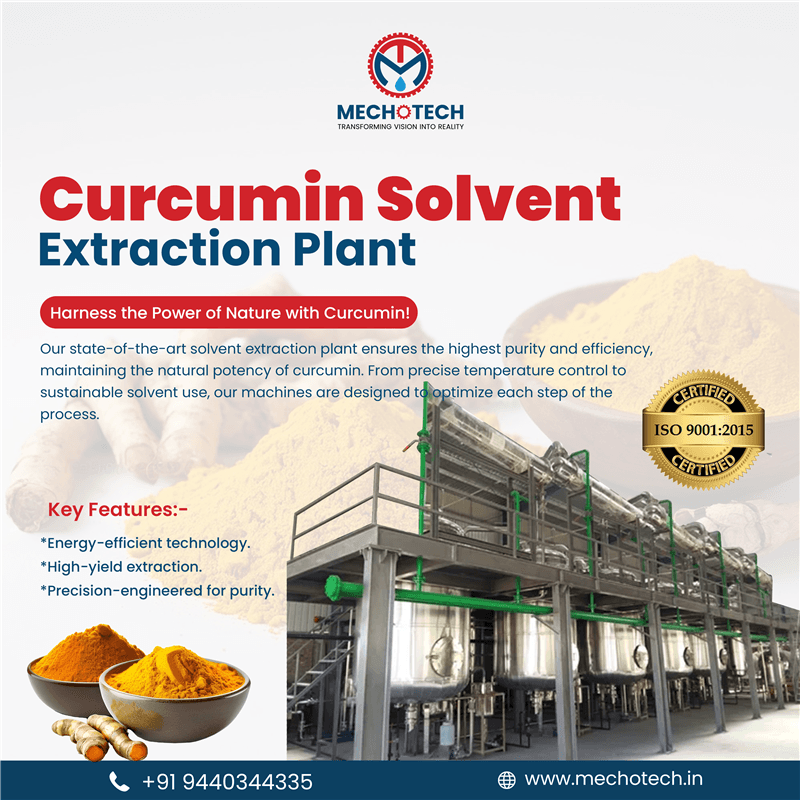
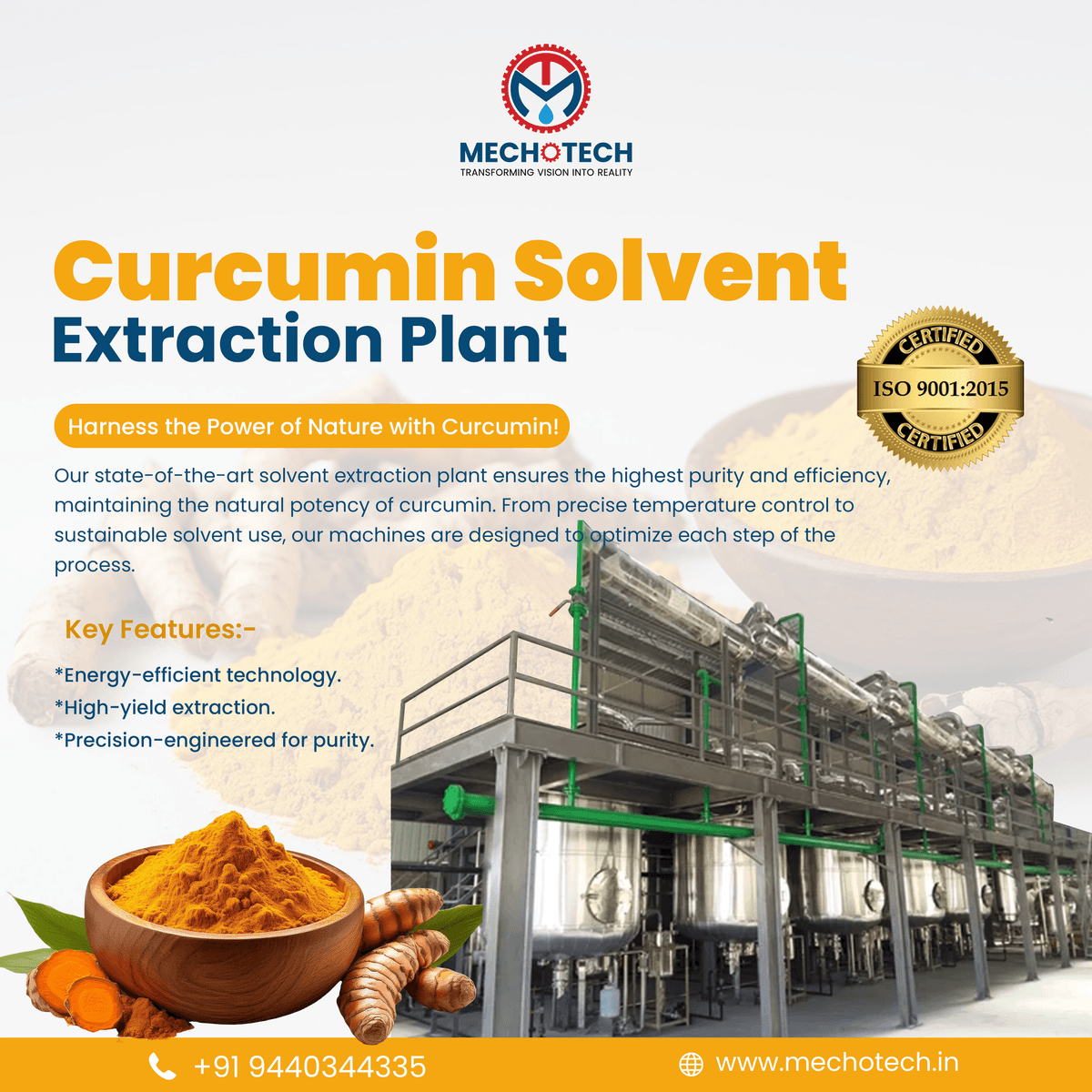
Natural food colours are pigments extracted from natural sources such as plants, fruits, vegetables, flowers and microorganisms. Unlike synthetic colours, they are derived from renewable sources and align with the growing demand for clean-label products. Common sources include turmeric (curcumin, yellow), paprika (orange-red), beetroot (betanin, red), spirulina and butterfly pea flower (blue), annatto seeds (yellow-orange), marigold (lutein), red cabbage and black carrot (anthocyanins), tomato (lycopene), spinach (chlorophyll), hibiscus, safflower and gardenia. They are used across food processing, beverages, dairy, bakery, confectionery, ice cream, nutraceuticals, pharmaceuticals, cosmetics and pet food.
2The Manufacturing Process
Colour manufacturing runs as a controlled sequence designed to preserve heat-sensitive pigments:
- Raw Material Selection & Preparation: Fresh, high-quality botanicals are selected for pigment concentration, freshness, moisture, purity and identity, then washed, sorted, peeled where required, cut and ground to improve extraction efficiency.
- Extraction: Prepared material is loaded into extraction vessels; depending on the pigment, water, food-grade ethanol or other approved food-grade solvents are used under controlled temperature, time, pressure, agitation and solvent ratio to preserve natural pigments.
- Filtration: The liquid is filtered through bag, sparkler or cartridge filters to remove plant fibres and suspended solids, producing a cleaner extract.
- Concentration: Vacuum evaporation concentrates the extract while preserving colour quality, reducing thermal degradation and lowering energy consumption.
- Drying: Where powder is required, spray dryers, vacuum tray dryers or fluid bed dryers convert the concentrate into a powder that is easier to store, transport and dose.
- Packaging: Finished products are packed in food-grade containers under hygienic conditions to protect them from moisture, oxygen and light.
3Major Equipment, Automation and Energy-Efficient Design
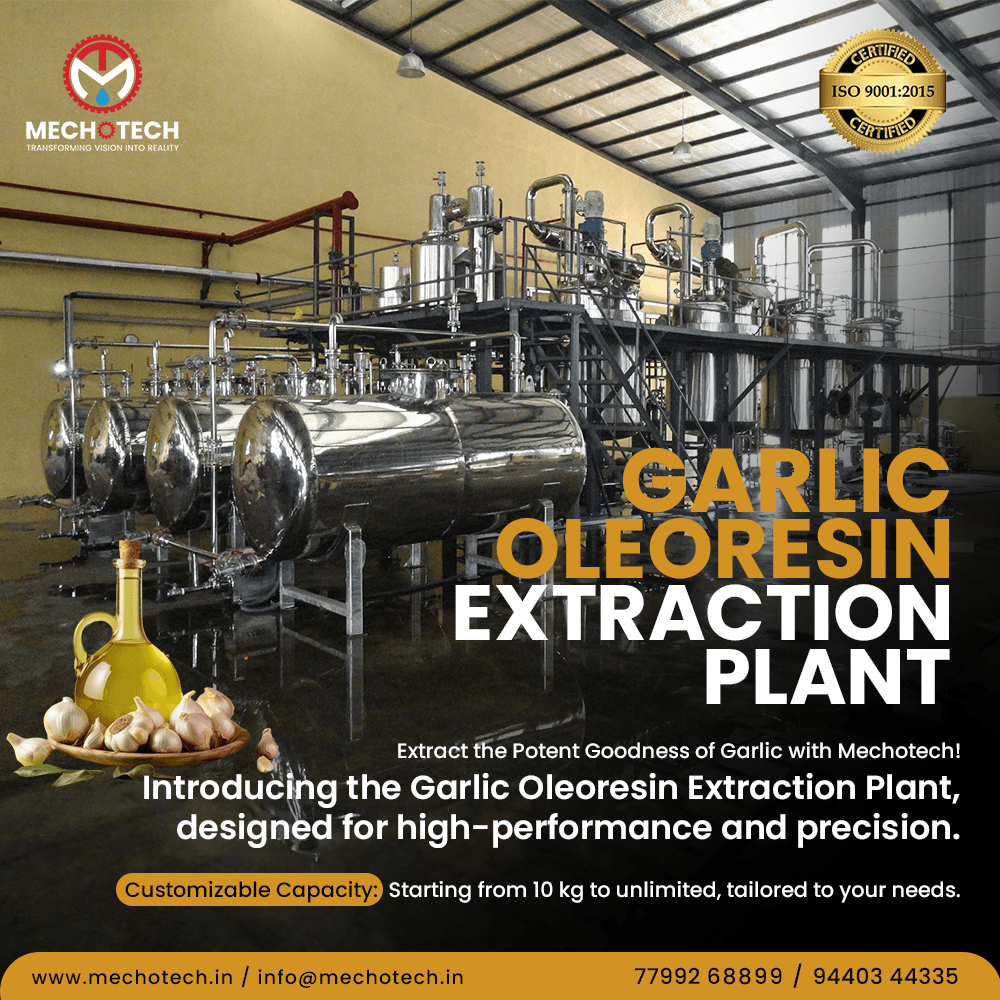
A complete turnkey plant integrates a raw material cleaning system, cutter and pulveriser, extraction vessel, filtration system, vacuum evaporator, solvent recovery system where applicable, spray dryer, storage tanks and transfer pumps. PLC and SCADA automation maintain uniform extraction conditions, consistent quality, accurate temperature control and reliable batch records while lowering labour. Energy-saving features — vacuum evaporation, optimised steam use, efficient heat exchangers and automated utility control — reduce operating cost while protecting product quality.
4Advantages and Applications
Natural colours are attractive because of strong consumer preference for clean-label products, plant-derived sourcing, a wide range of shades, better brand perception and growing global demand. They are used in fruit juices, soft drinks, dairy, yogurt, ice cream, bakery, chocolates, candies, sauces, ready-to-eat foods, health supplements and pharmaceutical syrups.
5Why Choose Mechotech
Mechotech provides complete turnkey solutions for natural food colour, herbal, nutraceutical and oleoresin extraction plants along with solvent recovery, vacuum evaporation, spray drying, PLC and SCADA automation and GMP-compatible processing plants — including engineering, manufacturing, installation, commissioning, operator training and comprehensive after-sales support.
Frequently Asked Questions
Which natural colours are in the highest demand?+
Can one extraction plant produce multiple natural colours?+
Why is vacuum evaporation used?+
Is automation important?+
Does Mechotech provide turnkey projects?+
Conclusion
The shift toward clean-label foods and naturally sourced ingredients is creating strong demand for high-quality natural food colours. Investing in a modern extraction plant allows manufacturers to produce consistent, high-value natural pigments while improving efficiency and sustainability. With extensive expertise in extraction technology, Mechotech delivers customised turnkey natural food colour extraction plants engineered for high productivity, superior product quality, energy efficiency and long-term operational success.
Ready to Build Your Extraction Plant?
Mechotech engineers are ready to design the perfect plant for your application.
Get a Free Consultation