Nutmeg, derived from the Myristica fragrans tree native to the Banda Islands of Indonesia, yields two commercially distinct spice products from a single fruit: the inner seed kernel (nutmeg) and the bright crimson aril that surrounds the kernel (mace). Both raw materials are processed into high-value essential oils and oleoresins that serve food, pharmaceutical, fragrance, and tobacco flavouring industries globally. Beyond its culinary appeal, the extraction of nutmeg's essential oils and oleoresins represents an intricate blend of chemistry, engineering, and regulatory science — with active compounds including myristicin, sabinene, α-pinene, and β-pinene that each serve defined industrial functions. Because nutmeg also contains regulated compounds (myristicin and safrole), pharmaceutical-grade processing requires careful GC-MS monitoring to ensure EU EFSA and US FDA compliance, making analytical capability as important as extraction efficiency.
✓Key Takeaways
- →Nutmeg (kernel) yields 5–15% essential oil by steam distillation; mace (aril) yields 4–17% — both are processed separately and have distinct GC-MS profiles and commercial applications.
- →Key GC-MS markers in nutmeg oil: sabinene (15–30%), α-pinene (15–22%), β-pinene (10–15%), and myristicin (3–8%); myristicin minimum 5% is the typical pharmaceutical supply specification.
- →Safrole (<0.1% in nutmeg oil) is a regulated genotoxic compound under EU Regulation 1334/2008; every batch for food or pharmaceutical supply must include a quantified GC-MS safrole declaration.
- →Nutmeg oleoresin yield is 15–40% from dried kernel by solvent extraction, capturing trimyristin, myristic acid, and phenylpropanoids absent from steam-distilled essential oil.
- →Mechotech's combined nutmeg-mace plants offer fractionation column capability to separate early monoterpene-rich fractions from later myristicin-dominant fractions for targeted specification batches.
- →Supercritical CO₂ nutmeg extract commands 3–5× the price of solvent oleoresin; steam-distilled essential oil suits food and fragrance; solvent oleoresin suits standardised pharmaceutical and food flavouring applications.
1Understanding Nutmeg Extraction
Nutmeg kernel and mace aril differ in both composition and processing parameters — and are distilled separately to preserve their distinct chemical profiles. Nutmeg essential oil (from the kernel) is characterised by a warm, spicy, musky aroma profile, while mace essential oil is lighter and more delicate, with a sweeter nuance preferred in high-end perfumery and flavouring. The choice of extraction method — steam distillation or solvent/CO₂ extraction — determines which fraction of the total phytochemical content is recovered and at what purity level.
- Steam Distillation of Nutmeg Oil: Steam distillation of dried nutmeg kernel yields 5–15% essential oil (v/w), with the primary chemical components being sabinene (15–30%), α-pinene (15–22%), β-pinene (10–15%), myristicin (3–8%), and limonene. Mace essential oil, distilled from the dried aril, yields 4–17% and has a somewhat higher monoterpene content relative to the myristicin fraction. Distillation is conducted at 100–105°C for 6–8 hours per batch, with the condenser temperature controlled at 15–20°C to maximise recovery of both light and heavy terpene fractions.
- Solvent Extraction of Nutmeg Oleoresin: Solvent extraction of dried, ground nutmeg using ethanol or hexane yields 15–40% oleoresin — a dark, viscous, aromatic concentrate that captures the full phytochemical profile including myristicin, trimyristin (a fat that constitutes 25–40% of nutmeg by weight), myristic acid, safrole (a regulated compound), and the fixed oil fraction absent from steam-distilled essential oil. Pharmaceutical-grade oleoresin requires safrole content to be verified and declared, as the EU sets maximum limits for safrole in flavourings under Regulation (EC) No 1334/2008 and EFSA guidance documents. Hexane is used when trimyristin and fixed fat content are targeted; ethanol when phenylpropanoids are the priority.
- Supercritical CO₂ Extraction: Supercritical CO₂ extraction at 35–45°C and 200–350 bar pressure produces a premium-grade oleoresin with zero solvent residue — critical for pharmaceutical and high-end cosmetic applications where solvent-free certification commands a price premium. The CO₂ extract preserves heat-sensitive phenolic and antioxidant fractions that would partially degrade during ethanol evaporation under conventional solvent extraction. Capital cost is higher than solvent extraction, but CO₂ extract pricing at 3–5× the solvent oleoresin price justifies the investment for processors targeting pharmaceutical and nutraceutical markets.
2Nutmeg Oil Composition and Regulatory Considerations
The chemical composition of nutmeg essential oil varies with geographic origin (Indonesia, India, Grenada), drying method, particle size before distillation, and the specific fraction of the fruit processed. A thorough GC-MS compositional profile is not merely a quality control exercise — it is a regulatory requirement for pharmaceutical and EU food flavouring applications. The two compounds that require particular attention are myristicin and safrole.
- Myristicin: Bioactivity and Pharmaceutical Interest: Myristicin (a phenylpropanoid constituting 3–8% of nutmeg oil) exhibits documented antimicrobial, insecticidal, and anti-inflammatory properties. Pharmacological research has investigated its neuroprotective and potential antidepressant mechanisms, and it is the compound most frequently specified in pharmaceutical-grade nutmeg oil purchase contracts. GC-MS myristicin quantification is mandatory for pharmaceutical supply agreements and typically requires a minimum of 5% and a maximum of 12% to meet most international pharmacopoeial monographs for nutmeg oil.
- Safrole: Regulatory Monitoring Requirements: Safrole, a minor constituent of nutmeg oil typically present at less than 0.1%, is classified as a genotoxic carcinogen by EFSA and is subject to specific maximum limits in flavouring applications — for example, no more than 1 mg/kg in food and beverages under EU Regulation 1334/2008. Processors supplying the EU food or pharmaceutical market must include safrole quantification (by GC-MS, detection limit 0.5 ppm) in every batch certificate of analysis. Mechotech advises all nutmeg oil clients on the specific EFSA documentation requirements before plant commissioning.
- Quality Parameters for Commercial Nutmeg Oil: Beyond GC-MS compositional profiling, commercial nutmeg oil quality is verified against physical parameters: specific gravity (0.860–0.920 at 25°C for kernel oil), refractive index (1.473–1.488), and optical rotation (-20° to +15°). Mace oil has a narrower specific gravity range (0.880–0.930). These parameters are specified in ISO 3215 (nutmeg oil) and serve as rapid in-process quality checkpoints at distillation, before the more time-consuming GC-MS confirmation is completed.
3Key Features of Modern Nutmeg Extraction Plants
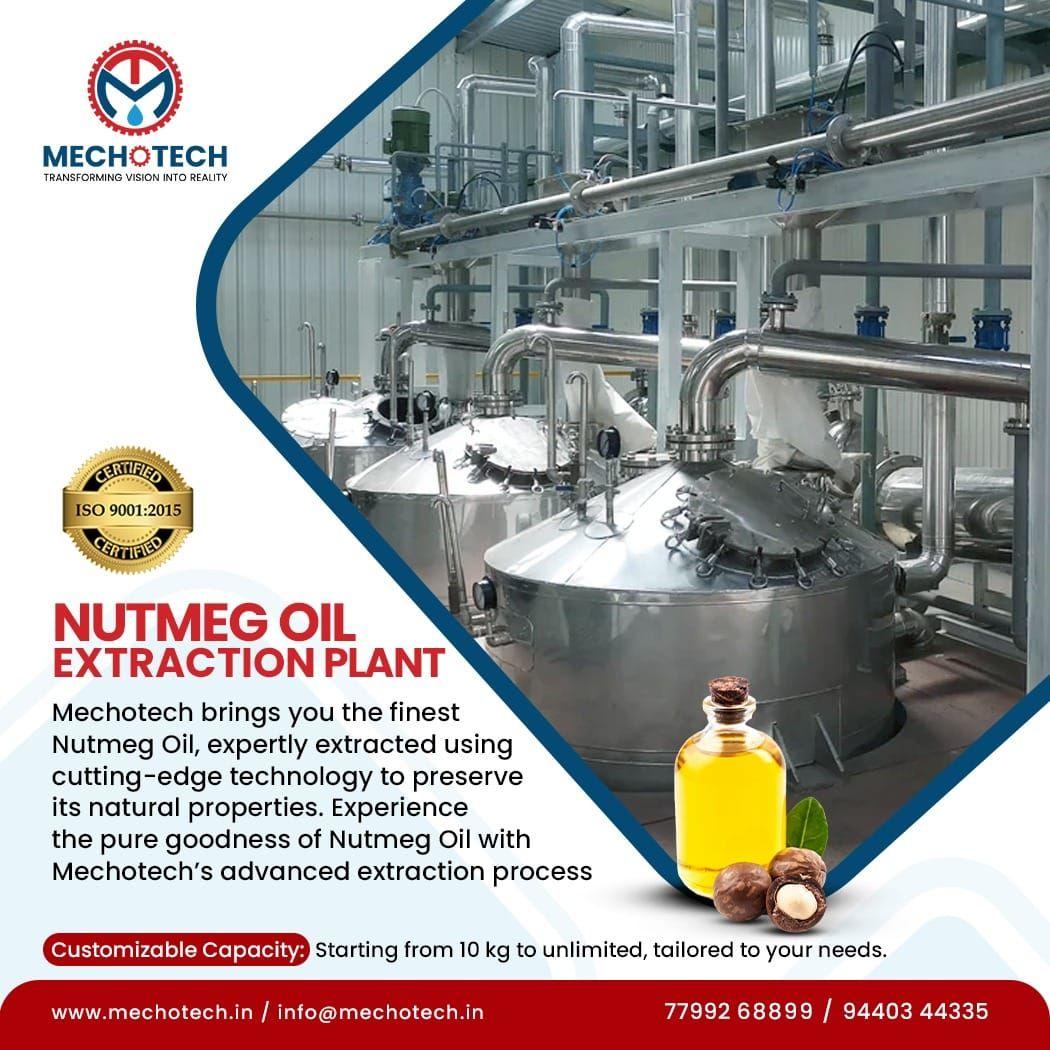
Mechotech's nutmeg extraction plants incorporate purpose-designed features that address the specific engineering challenges of Myristica fragrans processing — including the high fat content of nutmeg kernel (which can cause vessel fouling), the dual-product requirement for nutmeg and mace fractions, and the regulatory documentation demands of pharmaceutical buyers.
- Dual-Product Fractionation Capability: Our combined nutmeg-mace plants allow the distillation of nutmeg kernel oil and mace aril oil in separate campaigns on the same base plant, with only batch charging changes required. For clients processing both feedstocks, this dual capability significantly improves capital utilisation compared to maintaining two separate distillation lines. An optional fractionation column between the still and condenser allows early-fraction monoterpene-rich oil to be collected separately from the heavier myristicin-dominant late fraction, enabling targeted specification batches for different buyers.
- Precision Temperature and Pressure Monitoring: Real-time monitoring of still temperature (±1°C accuracy), steam pressure (±0.05 bar), and condenser outlet temperature ensures reproducibility across batches and shifts. Automated PLC control with batch data logging creates a full electronic record for each distillation run — covering charge weight, steam temperature profile, distillation duration, condensate volume, and oil volume collected — satisfying the traceability requirements of both ISO 22000 food safety audits and pharmaceutical GMP documentation.
- Sustainability and Spent Marc Management: Post-distillation nutmeg marc retains trimyristin and fixed fatty acids not recovered during steam distillation. Mechotech's integrated plants offer an optional hexane extraction stage for the spent marc, recovering a secondary trimyristin-rich oil with cosmetic and pharmaceutical applications. This marc-to-oil cascade approach improves total plant economics and reduces solid waste volumes by 30–45% compared to single-stage distillation alone.
4Applications of Nutmeg Extracts
Nutmeg's broad chemical profile — spanning monoterpenes, phenylpropanoids, and fixed fats — creates commercial demand across sectors with very different specification requirements. Understanding which fraction (essential oil, oleoresin, or CO₂ extract) serves each application is key to selecting the right processing configuration.
- Food and Beverages: Nutmeg essential oil and oleoresin are used to flavour baked goods (particularly European Christmas confectionery), dairy products, meat seasonings, sauces, and beverages including eggnog and mulled wine. Food-grade nutmeg oleoresin is standardised for total volatile oil content (minimum 10–12% v/w) and must comply with FSSAI (India), FDA (USA), and EFSA (EU) maximum use levels for myristicin and safrole. Oleoresin offers 3–4× the flavour intensity of nutmeg powder per unit weight, enabling more compact formulation and extended shelf stability.
- Pharmaceuticals and Traditional Medicine: Nutmeg oil is used in topical pain relief formulations — both Western pharmaceutical creams and traditional Ayurvedic and Unani preparations — leveraging its anti-inflammatory and mild analgesic properties. Standardised myristicin content (5–12% GC-MS verified) is the typical specification for pharmaceutical supply contracts. In Unani medicine, nutmeg (Jaiphal) preparations are used for digestive complaints, and a consistent oleoresin specification enables batch-to-batch reproducibility that was historically impossible with raw spice powders.
- Fragrance and Tobacco Flavouring: Nutmeg oil is a key middle note in Oriental and fougère perfume families, contributing warmth and spicy complexity. Mace oil, with its lighter and more aldehydic character, is preferred in floral and chypre compositions. In the tobacco flavouring industry — a major consumer of spice essential oils — nutmeg oleoresin is used to impart warmth and body to pipe tobacco and cigarillo blends, with usage levels governed by tobacco product regulation in each market.
5Mechotech: Leading the Way in Nutmeg Extraction
Mechotech's Nutmeg Distillation and Extraction Plants are designed for the specific feedstock characteristics of Myristica fragrans — accommodating the high oil content of kernel and mace, the regulatory sensitivity of myristicin and safrole monitoring, and the dual-product commercial model of most nutmeg processors. Our plants are supplied with ISO-calibrated instruments, PLC automation, and a commissioning package that includes reference GC-MS profiles for your specific raw material source.
- Eco-Friendly Operations: Energy-efficient steam generation with condensate return loops and integrated solvent recovery (for the oleoresin extraction line) minimise operating cost and environmental impact. Spent marc from both distillation and solvent extraction stages is characterised by Mechotech's process team to identify the most economically valuable disposal route — secondary oil extraction, composting, or biogas — helping clients maximise revenue from every kilogram of raw material processed.
- Custom Engineering for Dual Feedstocks: Plants are designed for your specific feedstock type — whole kernel, mace aril, pre-ground material, or alternating campaigns of both — and target output specification (food-grade, pharmaceutical-grade, or fragrance-grade). Vessel sizing, steam-to-charge ratios, and distillation duration parameters are all validated on a representative sample of your actual raw material at our Hyderabad R&D facility before final plant design is locked in.
- Dedicated Customer Support: Our team provides ongoing technical assistance including annual GC-MS calibration verification, regulatory documentation support (Certificate of Analysis templates, safrole compliance statements, ISO 3215 test reports), and process optimisation reviews as your raw material sourcing evolves. Remote monitoring integration allows our engineers to review batch performance data and advise on parameter adjustments without requiring an on-site visit.
Frequently Asked Questions
What bioactive compounds are extracted from nutmeg?+
Which extraction method is best for nutmeg — steam distillation or CO₂ extraction?+
What is myristicin and what are its applications?+
What are the main industrial applications of nutmeg extracts?+
How does nutmeg essential oil differ from mace essential oil?+
Conclusion
For businesses seeking premium nutmeg extraction solutions, the combination of Mechotech's dual-product fractionation capability, regulatory-grade GC-MS documentation, and post-distillation marc recovery options offers a complete processing pathway from raw Myristica fragrans to specification-compliant essential oil and oleoresin. Whether your target market is food flavouring, pharmaceutical topicals, or high-end fragrance, we engineer the plant configuration — distillation only, solvent extraction only, or the combined cascade — that maximises your return on raw material investment. Contact us today to explore how we can build the ideal nutmeg processing plant for your business.
Ready to Build Your Extraction Plant?
Mechotech engineers are ready to design the perfect plant for your application.
Get a Free Consultation
.jpeg&w=1920&q=75)